
Halema Salamah: A Palestinian Immigrant Who Built a Legacy of Generosity and Grit
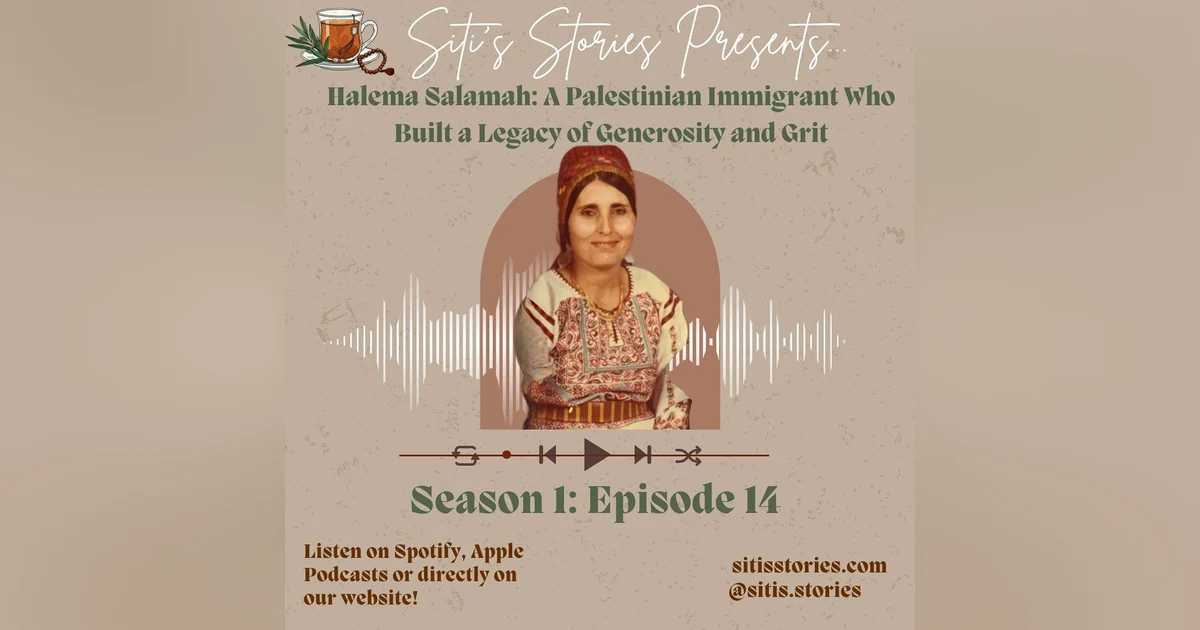


In this powerful and deeply personal episode of Siti’s Stories , I share the incredible life of my grandmother, Halema Salamah Gaber. Her story is a testament to the spirit of resilience, determination, and boundless generosity.
Highlights from the Episode:
- A Journey Across Oceans:
- Halema's family's journey to America began with a twist of fate at Ellis Island, leading her father to military service in 1914 where he cut onions and peeled potatoes on a military boat. This unexpected turn granted them American citizenship even before Halema was born.
- Arriving with $37:
- In 1960’s, Halema came to America with only $37 in her pocket. She hustled tirelessly, working until she and my grandfather could open their own business and achieve the dream of becoming their own bosses and generational wealth.
- Real Estate and Resilience:
- Halema invested in real estate at the perfect time, building her way up from humble beginnings to a successful and thriving business, all while remaining true to her roots and values.
- Brothers Produce – A Family Legacy:
- Halema and her family established Brothers Produce , a Middle Eastern grocery store that became a cornerstone in the community. What began as a family business flourished into a legacy; providing fresh produce, familiar tastes, and a space for community connection. For decades, Brothers Produce stood as a symbol of hard work, resilience, and the spirit of giving back.
- A Legacy of Generosity:
- Known for her unwavering generosity, Halema dedicated her wealth to giving back to her Palestinian community supporting hospitals, schools, mosques, and shelters both in New Jersey and overseas, even after her passing.
- Advice for the Next Generation:
- Despite being illiterate, Halema believed deeply in education, hard work, and saving money. Her advice to younger girls remains a beacon of wisdom: "Get an education, save your money, and work hard."
- A Life Well-Lived, A Legacy Remembered:
- Halema passed away this past September, but her legacy of resilience, hustle, and community impact continues to be felt, having streets named after her and scholarships in her name.
This episode is a tribute to her life, her sacrifices, and the powerful example she set for us all. This story isn't just about one woman, it’s about the strength of Palestinian women, the power of perseverance, and the deep roots of generosity that shape our communities. I recorded this episode as my very first one when I first got the idea for Siti’s Stories , and I’m honored to share her legacy with you.
🔗 Visit sitisstories.com for more episodes and to share your own stories.Episode 7 was my own personal episode where I shared more about both of my grandmothers.
Follow & Connect:
Instagram: @sitis.stories
Website: sitisstories.com
Marhawa and welcome back to Sati's stories. Today's episode is a really special and personal one. It's actually the very first episode I've ever recorded for this podcast. It's part of my Sati Khalima Salama's story. This recording captures parts of her journey coming to America, how she built her life here, and how she built a business from the ground up with my grandfather. I actually recorded this with her two years ago, almost to the date. It was July 2023, subhanallah. I had really big plans of capturing her full story. This was just supposed to be kind of the first round of me recording with her, but due to distance and then her health issues, I just didn't go to plans, unfortunately. I I would have really loved to have on the recording her life before America and her memories of Fallestine, how that shaped her to be who she was. But in September of this past year, she unfortunately passed away a layout. She was really so excited about what I was doing with this podcast. She loved being able to support other women. She loved anything to do with Fallstein and empowerment. So she would have really, really loved to hear this episode and know that people were listening to it. And what this podcast kind of turned out to be. It's really surreal being able to listen to this recording six months like after she's passed. Editing this was really emotional, but also like really nice. Like it was really, really nice to hear her voice again. But yeah, so a couple things before this episode starts. I just wanted to remind you guys that this was literally the first thing I ever ever recorded. I was there, I was visiting her, and I was like, yeah, let's get started to deal. Um, and uh with the intention of always going back and being able to record with her, but like I said, um life kind of took a different turn. So yeah, before I press play on this recording, I want you to know that you are going to hear um the voice of a woman who had endless strength, dedication, and a commitment to her family. Palestine and anything she put her mind to. Her and my grandfather came to America with $37 and built an entire empire, whishallah and gave back more than they ever took. And this is her story in her words. It's truly an honor to be able to share some of the things she said with you guys. Okay, Siddi. So let's start off with your name and what balan you're from.
SPEAKER_01It's me, Halima Salama.
SPEAKER_00Your life was largely shaped and influenced by the fact that your father, Sidi Salama, received American citizenship at a time that not many Ottawa were really coming to America to begin with. That moment really altered you and your siblings' lives forever. Can you share a little bit more about how that came to be to begin with?
SPEAKER_01My father he come in America. Handam an Ajah, Kalula Bid Dakitruhi Salama, but ni an Arab, where had him the dream, where had him bear Nabala. Kalula Salama bin the Nok Bad Fidish. Kell him Anna Bakrash Kalula Kalula Landabelli, La Hawaichad, the S Madish. A duom, Hatusat Tushur, Fil Kitchen, it kashir batata albasak. Al kiddarat uh the kart in the another the khati jaesh had them to show Nabali Rahkel him. About Kafiani elf in clean. You see how lad. Mash. Okay. Kalula okay, at le Mara had a glad when Jo was in me.
SPEAKER_00So okay, so because your dad, Sidi Salama, peeled potatoes and onions as a part of the military during World War One, he was granted automatic citizenship. So then when he went back to Falloutine and got married and had kids, you and your siblings were born and were automatically awarded American citizenship. Okay, Sitsi, so you have a very interesting story with your name. Everyone knows you as Hadima. Obviously, your family knows like the real story, but everyone in the community knows you as Hadima. But what's the real story behind your name? And what's so funny is that I like cannot imagine you as anything else but Hadima. And subhanAllah, we have so many people in our family who were named after you, all Hadima. Um so you kind of shape that for everyone else to come. Hotkan awal madrasa fil better?
SPEAKER_01Ulamasapahna had zeanem lamajinam nilab filba austeen, fitamani of ishreen wahabad il-arba auseteen. Anajit ana will add the khuya, josy masahli shiji. Kalli Lamabutruhi Hana kabit kedmila. Lamajina Hana, jitana will add the khuya, ket damitla josy, ka athabat to shul, or to itla mamela. Uja, rush na stager dar, kad deshja ajima, aju said out thin dollar, put la hat in it the baset a lad, and a valet and darakuya, and darabugazi, and a will at the khuya. B hat of musali with the ruh and stager dar, and a man zoom in to one a dollar, the fan of ashard and nil and lil jar him, uh the baset a lot. Shuffadish tea back a weight for the baset. The flang of the baset ashard.
SPEAKER_00Wow.
SPEAKER_01Kadesh a jar al dollar to three dollar.
SPEAKER_00Wow, a month?
SPEAKER_01Oh, sure. A janabil kharaba thal sari, uh stove. Yo, shahar ajah ham seryala tu kwara. So we kadish alhayabakat. Shtagal josy, if dalar wukwara fissa. Okay, kuld laya sahbadar, kablesh ajanil uhsarialat wukwara, but the true rajali. Kallia ya halimah, manti chilliom ibduhob zing. And as such an u akulti endi, it's main or have it. Well I wanna jose kandila, baraj alish. I just have to kwara, bakula shouf, or back of yelling yokbasish, it's yelling real nose, and it's a man in Asia. That's in Jeep, yeah. Okay. You said to have this for a barfang.
SPEAKER_00Okay, so after you got married and you moved to America, you started having kids. How many kids did you have, and how was that trying to be a working mom and raising little kids and also being in a new country? Yeah.
SPEAKER_01Sorot ashtril. Yeah.
SPEAKER_00Wow. I don't know what words everyone uses if they're the same across the board, but a fabrica for everyone who doesn't know is like a fabric factory or a textile factory. When did that shift happen when you and CD were working for other people to opening up your own business?
SPEAKER_01Okay, twist. Kali Baketani Machine, young Wallet Steve. Kell anab the Arjal Mahaltabay. Stalam ting mahal. Kali Ajakali Halima, Haba Hamatovik Stalamil Mahal. An uh anabaruak. Mahal. Hateta filet uh ashtribble.
SPEAKER_00Talk about working moms. So you were like you wanted to work and you wanted to have your babies by you. So you put a playpen in the store in Brooklyn?
SPEAKER_01Oh, in the back.
SPEAKER_00And you had your five-year-old daughter feed the baby.
SPEAKER_01Yeah.
SPEAKER_00Because you had to for your kids, for your family.
SPEAKER_01Yeah. Yeah. Okay, okay, and away, something like that. So Wallace, I don't have a market comes out of the film where Market Hub. Okay.
SPEAKER_00Oh, okay, yeah, yeah, yeah. Like a farmer's market.
SPEAKER_01Iceberg. Yeah. Kalyoka. Raja Boy. Raj Bajar. Someone leaves.
SPEAKER_00Wow, Satya, aren't you glad that Sadal pushed you to start it?
SPEAKER_01Samana had rainbow.
SPEAKER_00Yeah, rainbow. I remember my mom would always talk about it. So the thing that I find really incredible that I really want to bring to light is that you are doing all of this while not knowing how to read or write. How did you continue to grow your businesses from Rainbow Store to what everyone now knows as Brothers Produce or Hesbethima?
SPEAKER_01I sell it.
SPEAKER_00How did you find the strength to push through all the negativity and keep going? It's gonna happen whether or not yeah. Yeah, the store's name is Brothers Pradesh, but I mean everyone knows it and calls it as a different name.
SPEAKER_01Ah yeah. I just won't shagil barraima kusa. Like a sleep on a sidewalk. Rubber of Lazalama's bit Halima Shannon stage with Berk.
SPEAKER_00How do you think you were able to be so successful, Mashallah? You're very well known in the community. What do you say to those who look at you and say they wanted to be successful like you?
SPEAKER_01I wish everybody.
SPEAKER_00So who would you say is your role model in life? Yeah, I mean that's something I really want to highlight, Satya, is yes, you've built so much, mashallah, and accomplished so many incredible things. But one thing that always stands out to me is how you've used your success to give back and always donate and support Philistine, whether it's, you know, supporting the Palestinian community here in America or supporting Philistine in Philistine. Can you like just explain how you've been able to use your wealth and achievements to support Philistine, both here and back in the blood? Can you be more specific?
SPEAKER_01Like Anna Bakate and I'll Josie, and say I did bellet. What little ballet.
SPEAKER_00When I went to Philistine, when I went to bed an I saw that in the hospital for the Mustafa, or a whatsafe machine taba the book of the sword.
SPEAKER_01So we're not gonna larger ishi, o broadway, tell him Jul itzelajah, Ukulikhack, tell him what? And a beta but fai.
SPEAKER_00And you helped build the roads in Bet Anan, right? Yeah. The infrastructure.
SPEAKER_01Sally and he ballad fish me has a letter. Salvatanga larger. What had a larger? That's the Bab Kharban. What happened, Mustafa? Bishman Raskarkar. Kalna Takhilak Ruhat Anna wa uh Abu Fadi Adana Adanables Sharina Talaja W Sawinam Islamic believed Medumawasir Lal Maya. Had the A Rohil Hadad.
SPEAKER_00What is something you wish you changed or done differently in your career or life?
SPEAKER_01I wish I wouldn't.
SPEAKER_00Yeah, but that wasn't your choice. Oh, Sati, I'm sorry, that makes me so sad. I mean, it wasn't your fault. I mean, your mom died in childbirth and your dad didn't let you go to school because somebody had to take care of your little siblings. And then yeah, I mean I totally get it after you get married and become a mom, but when you were like busy working and trying to support your family, but Mashallah, you were able to do so much. What is something that you would tell like 13-year-old girls? Like, what's some advice that you would give them?
SPEAKER_01Walim and Bakuwuli anti law mitalma bitkuli la Zlam Ruhuman Kuddami, Alalisawati. U Batman lachil wa had zay if chief ina surna is day tab.
SPEAKER_00Allah Birzik is an interest so much for listening to this episode of Siddhi's stories. My Siddhi Halima Salama was more than just a businesswoman. She was a symbol of resilience, generosity, and a love for her community and family. Her legacy lives on through her children, her grandchildren, even her great-grandchildren, and the countless people she helped along the way. Recording this episode with her two years ago was just supposed to be the beginning. I had plans to continue this journey to sit with her and record her stories of Falustine, her memories before America, and the roots that shaped her strength, though I didn't get the chance, inshaAllah, her sister, my great aunt, Haria, will be joining me next season to share those memories and her own story as well. That will actually be, you know, the premiere of next season. So just a little snippet for you. If you want to hear more about my city, I actually have my own personal episode, which is episode seven, where you hear me speak about why I created this podcast and how both of my grandmothers were the inspiration behind it. I go into more detail and you will get to know my grandmother in another way, aside from being a businesswoman. I really encourage you all to listen to that episode as you'll be able to get more of a holistic idea of who she was and how much she meant to everyone around her. I also wanted to take this time out to express how proud I am of my family for continuing her and my grandfather's legacy forward by their generosity, hard work, and continued dedication to their passing brothers and sisters here and overseas. Make sure you guys follow us on Instagram at city's.stories. You could also check out our website, cittiesstories.com. I will include everything in the show notes down below. Make sure to subscribe to stay updated and get reminders of what's to come. The next episode you guys will hear will actually be our season finale. It's going to be an amazing compilation of viewers and listeners sharing their own Siddhi stories, and I'm so so so honored and happy to be able to give a platform to share stories that really need to be heard. Until next time, stay rooted, stay resilient, and keep sharing your sitti stories. Masalama,


